
This gluten-free potato flatbread has cooked potato mixed directly into a flour-and-psyllium dough. Cheddar, parsley and garlic season the bread itself; there is no separate stretchy cheese filling. Thin rolling and several short pan turns give the surface its mottled brown spots.
Weigh the cooked potato
Use 300 grams of cooked, riced potato or suitable leftover mash. Those two forms pack differently into a cup, so volume is less useful here. Let freshly cooked potato cool until warm before combining it with the gel. Very rich mash with large amounts of dairy changes the dough balance.
Roll thin and keep portions covered
Divide the dough before rolling so the eight flatbreads are reasonably consistent. Dust lightly and rotate as you roll to prevent sticking. A thickness of one to two millimeters is the target. Cover waiting portions and separate rolled breads with parchment instead of leaving them exposed to dry out.
Adjust heat by the spots
The first cooked side should show golden patches before turning. Brush butter onto a cooked surface, then continue flipping as directed to deepen the spots. The skillet heat can need adjustment as you work through the batch. A thick, stiff disk needs a rolling correction rather than simply a longer high-heat cook.
Reheat without drying
The flatbreads are pliable when freshly cooked, and gentle reheating helps restore that quality after refrigeration. Use a brief microwave warm or a little water with a covered skillet. The aim is to warm through, not to toast the bread until brittle. Keep extra fillings separate from the base recipe.
Gluten-free ingredients and allergens
Use the listed flour weights and distinguish individual bread flours from a plain gluten-free blend. Follow each xanthan or psyllium instruction rather than changing binder amounts automatically. Check packaged ingredients and use clean tools and surfaces to limit gluten cross-contact. Other allergens are listed separately; gluten-free does not mean dairy-free or nut-free.
Contains: Milk from cheddar and butter. Check individual flours and preparation surfaces.
For packaged ingredient claims, see FDA gluten-free label guidance.
Serving and storage
Refrigerate sealed leftovers for 2–3 days. Reheat in the microwave 30–45 seconds, or lightly mist with water and warm covered in a skillet for 30–45 seconds per side.
For another gluten-free idea, browse DayTasty recipe collection. Choose a recipe that suits the occasion and check its ingredient notes before starting.
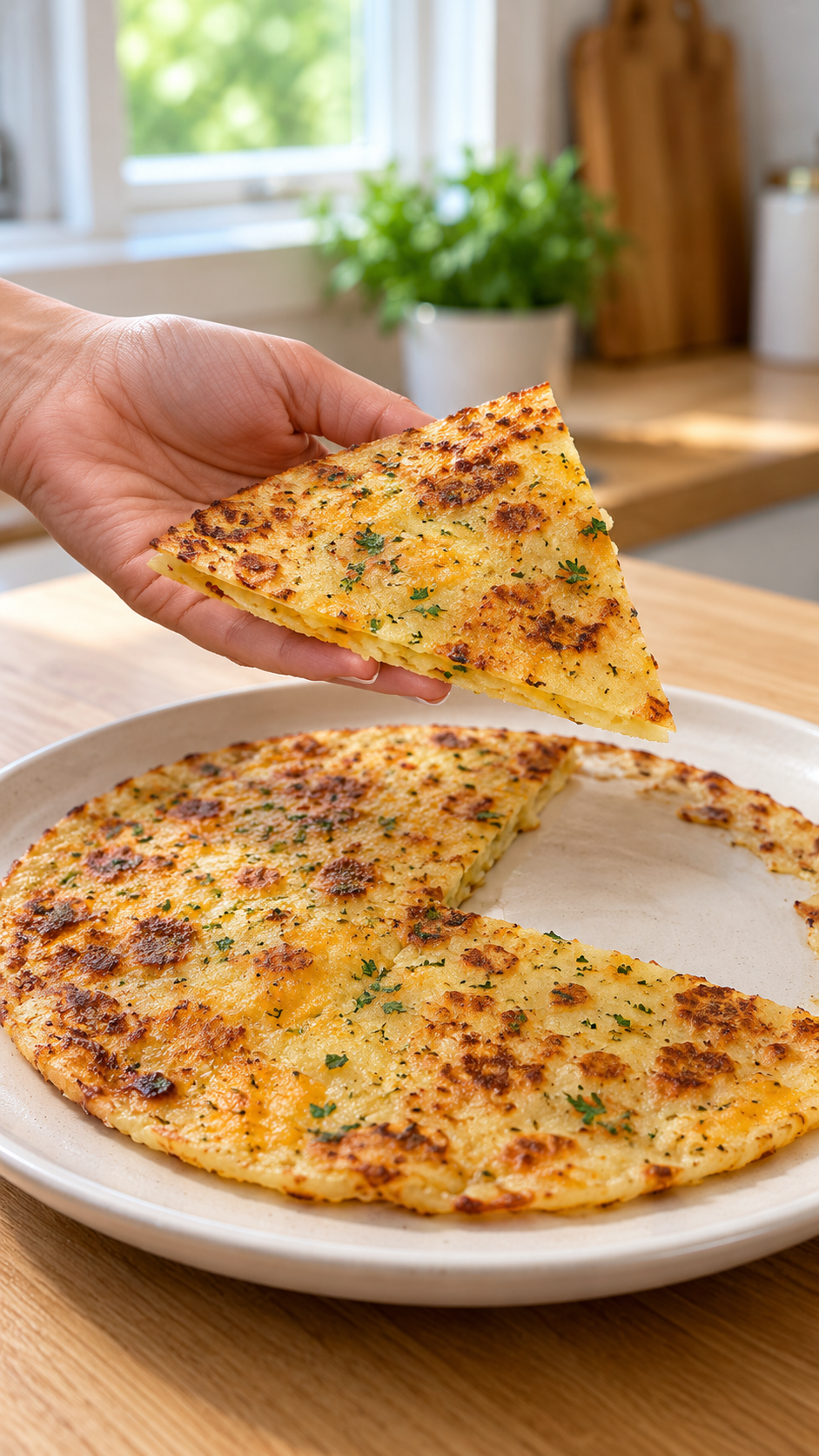

Gluten-Free Potato Flatbread
Ingredients
Method
- If starting with raw potatoes, boil them skin-on until fork-tender, roughly 30 minutes. Drain, cool until warm, peel and rice. Weigh 300 g cooked potato. Alternatively use 300 g plain leftover mash that is not very rich in cream or butter.
- Mix psyllium and lukewarm water and let gel for 30–45 seconds. Combine millet, sorghum, baking powder, salt, pepper and garlic powder separately.
- Add the potato, cheddar, parsley and dry mixture to the gel. Knead until smooth and springy without unmixed gel or dry patches. If necessary adjust with at most about 1 tbsp extra water or millet flour, according to the dough consistency.
- Divide into eight portions, roughly 115 g each, and round them. Keep covered while working. Roll each on a lightly floured surface to about 9–9 1/2 inches wide and 1–2 mm thick. Separate rolled flatbreads with parchment and keep covered.
- Heat a large dry skillet over medium to medium-high heat. Cook the first side for 60–75 seconds, until golden spots form. Flip, brush the cooked side with melted butter and cook the second side about 1 minute.
- Flip again, brush the new upper side with butter and cook about 45 seconds. Flip a final time and cook about 30 seconds. Adjust heat to get deep brown spots without burning. Stack cooked flatbreads on a paper-towel-lined plate.
Notes
Refrigerate sealed leftovers for 2–3 days. Reheat in the microwave 30–45 seconds, or lightly mist with water and warm covered in a skillet for 30–45 seconds per side.
Contains: Milk from cheddar and butter. Check individual flours and preparation surfaces.
Use the specified flour and binder amounts. Check packaged ingredient labels and avoid gluten cross-contact.